
You do not need a polished illustration to ask for a patent drawing quote. You do need a clear record of what must be represented. The most useful brief separates the invention information supplied by you or your patent professional from the drawing work you want to commission.
This checklist is for commissioning redraws, figures and diagrams. It is not a guide to writing claims or choosing a filing strategy. The downloadable brief at the end works for a first enquiry; do not include confidential invention details until you have agreed how they will be shared.
1. Name the destination and the drawing task
Tell the provider whether you need a simple diagram redraw, an update to existing figures or a new drawing set. State the intended patent office if known, the requested page format and the instructions from your patent professional. If those decisions are not settled, mark them as pending rather than asking the illustrator to guess.
2. Gather a complete reference set
- Sketches: one clearly named file per view, with the latest version identified.
- Photos: well-lit images of each relevant side, with close-ups where details matter.
- Existing drawings or models: name the format and confirm the provider can open it.
- Diagrams: supply the complete sequence, connections, decision branches and approved labels.
- Unresolved details: list missing dimensions, contradictory views or parts that are not visible.
A photograph records one viewpoint. It does not establish hidden geometry or remove perspective distortion. If a provider must build a model or infer a missing view, that is a separate task to discuss. Where accuracy depends on unavailable information, resolve the reference gap before commissioning final linework.
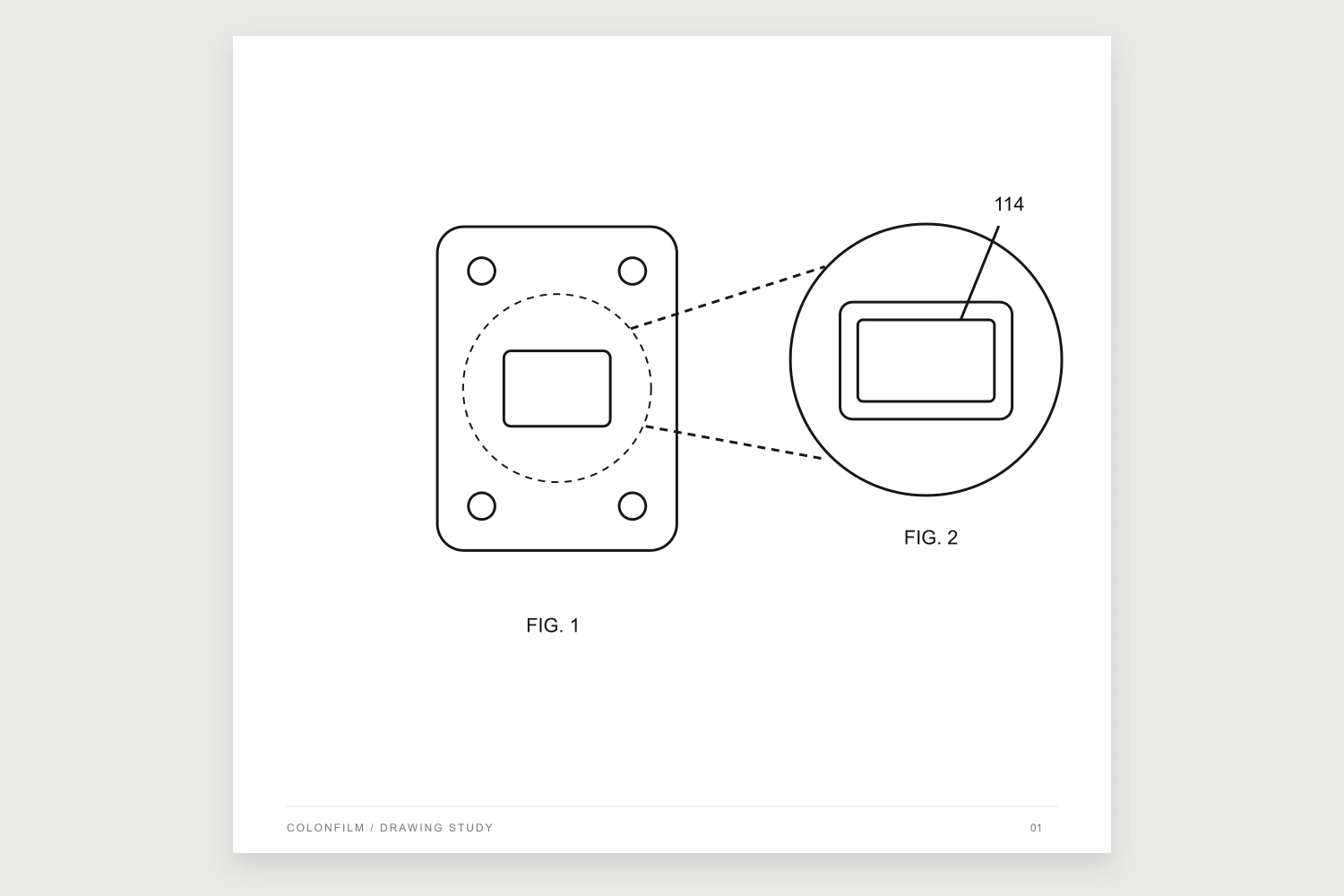
3. Write a figure list, not just a page count
Give every requested view a provisional identifier and a short purpose. For example: front view to show the exterior arrangement; side view to show depth; enlarged detail to clarify a connector. These are planning examples, not a universal list of required patent views. Your patent professional determines what the application needs.
A practical figure register has five columns: figure, subject, source file, labels and approval status. That makes a quote traceable. If FIG. 3 is added later, everyone can see that the agreed list changed instead of arguing about whether it was included in “the drawing.”
4. Keep reference numbers consistent
The USPTO utility application guide requires the same part to use the same reference character across views, and different parts not to share one. Its drawing guidance also addresses page size, margins and legibility. Confirm the applicable instructions rather than assuming a visually tidy page is ready to file.
Include a reference key with your brief: number, part name and any spelling that must match the accompanying description. When a component changes, update the key and affected views together. Ask the reviewer to check a complete set rather than approving isolated screenshots from different versions.
5. Agree on files, revisions and approval
Name the PDF page size and the editable format you actually need. “Source file included” could mean SVG, AI, a CAD drawing or a 3D model; these are not interchangeable. Specify whether the illustrator is producing only the figures or also arranging the final sheets.
Agree who reviews technical accuracy, who supplies consolidated feedback and how many revision rounds the price covers. Separate corrections to the agreed brief from a new design or extra views. Set a draft review date and a final delivery date, leaving time for your patent professional to review before filing.
A patent drawing brief you can copy
- Project reference and contact person:
- Drawing task and intended patent office, if known:
- Figure list: identifier, subject and source file for each view:
- Reference numbers and approved labels:
- Available sketches, photos, diagrams or model formats:
- Missing information and questions to resolve:
- Required PDF page size and editable files:
- Draft review date, final date and budget range:
- Technical approver and consolidated feedback contact:
- Confidentiality and file-sharing arrangements to agree:
Download the editable brief. Free, with no registration. Use a non-confidential description for the initial enquiry.
Before you accept the proposal
Check that the quote repeats your figure list and names the deliverables. Ask how incomplete references, additional views and later corrections will be handled. If the proposal simply says “patent drawings,” request a more precise scope before paying.
Our patent drawing cost guide explains how per-sheet and per-figure pricing differ. To discuss a simple redraw or diagram with COLONFILM, send the outline of your brief first. We will assess the requested work before agreeing a scope; legal drafting and filing are separate services.