
A good movie poster gives your film a visual identity people want to look at. If you have money set aside for a professional designer, the useful question is what that investment will buy: a strong concept, the right image-making, and artwork suited to your release. Here is how to compare the cost without reducing the decision to the cheapest rectangle.
How much does a professional movie poster cost?
At COLONFILM, the published direct-order packages are $215, $350 and $485 USD, with different levels of image work and adaptations. These are our studio’s listed prices, checked September 9, 2026—not an industry average. A custom campaign, unusual format or additional creative direction needs its own scope.
| Package | Price | Main distinction |
|---|---|---|
| Basic | $215 | Standard poster up to A3, image adjustments and print-ready files. |
| Standard | $350 | Advanced photo-composite work and social media adaptations. |
| Premium | $485 | Editable source file and multiple format adaptations, alongside the Standard work. |
See the current package details for revisions, delivery and extras. Printing physical copies and buying advertising are separate from designing the artwork.
Outside a defined studio package, quotes can be substantially higher. Bobo Creative’s UK guide discusses indie posters below £4,000 and larger productions costing more as the scope expands. That is the agency’s market context, not a fixed tariff or a like-for-like comparison with the packages above. Bobo Creative: film poster design cost.
This is why a single “average movie poster price” is not a good buying guide. Compare the actual creative task, the experience you want and the work included. Keep different currencies and campaign scopes separate.
When is it worth investing more in the poster?
Spend more when you can name what the additional work contributes. A film with weak source photography may need more image-making. A distinctive illustrated approach may require a different specialist. A release with several placements may need considered adaptations. None of those needs is measured by how many objects appear on the poster.
A simple-looking composition can contain excellent judgment: the right expression, a memorable title treatment, an image that gives the story just enough mystery. Ask to see relevant finished work and discuss why a proposed approach suits your film. A larger invoice alone does not tell you whether the idea is stronger.
Keep the artwork budget in the context of the release. The Film Collaborative emphasizes that key art needs support from the wider campaign; spending on design at the expense of everything that helps people encounter the film can undermine the plan. The Film Collaborative: developing key art.
Choose the designer by the film you are selling
Look for work that communicates the kind of viewing experience your film offers. A designer’s strong action composites do not automatically answer whether they can sell a quiet documentary, an intimate drama or a restrained horror film. Relevant judgment matters alongside technical finish.
Open a few portfolio pieces at a small size. Can you identify the main subject and read the title? Does the image suggest a specific mood? Then look closely at the full version for typography, image integration and finishing. These are practical checks, not a prediction of ticket sales.
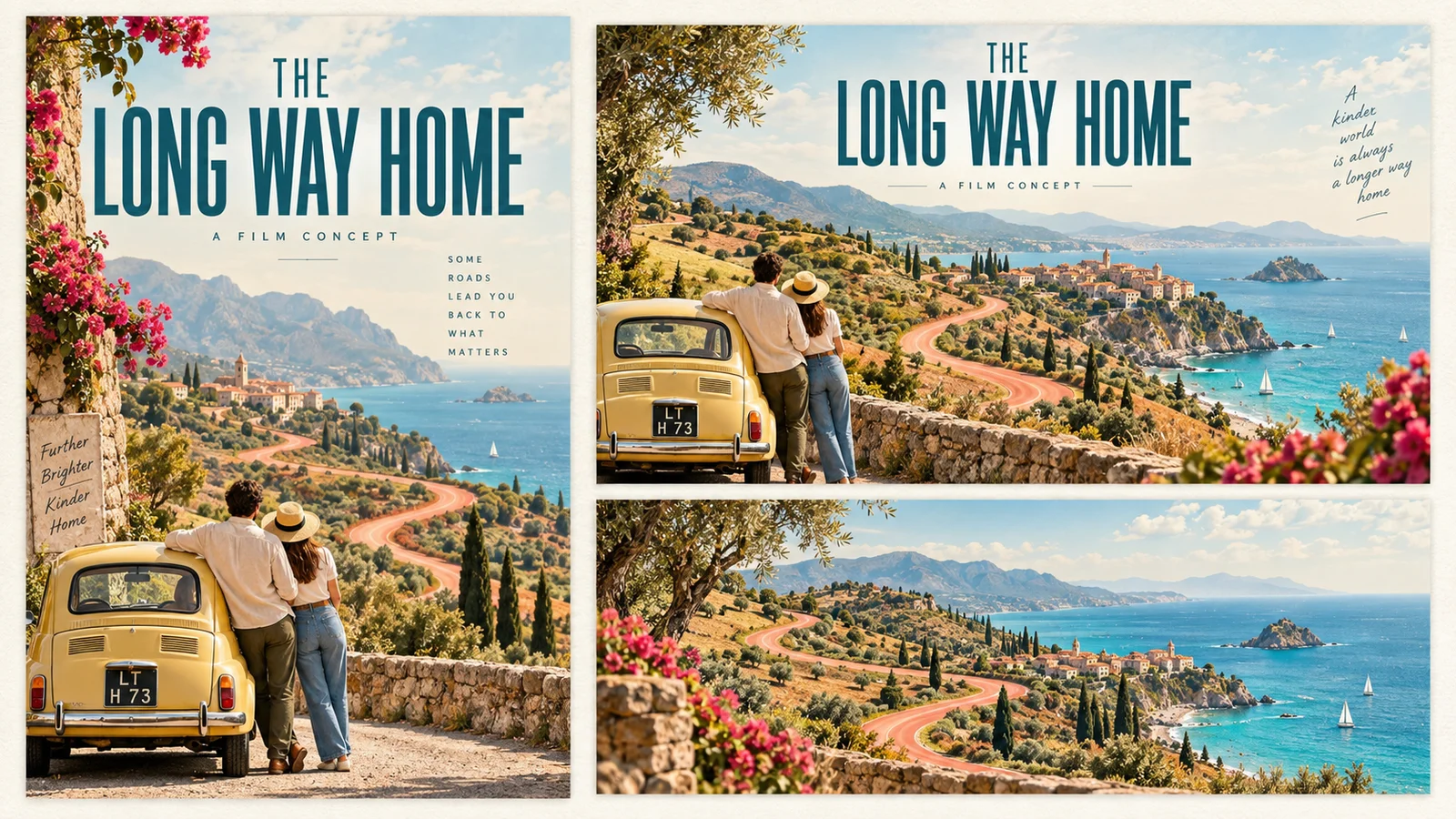
Consider the sunny road-film example above. Its open sky, winding route and two travelers make a different invitation from a close-up face against a dramatic background. The title has space to breathe, and the landscape adaptation gives the relationship and the journey a different balance. The point is not that every film needs this mood. It is that a poster should make a deliberate promise about the film behind it.
Ask a prospective designer to talk through a relevant piece: what they chose to emphasize, how the title fits, and why the composition suits that kind of film. A clear explanation helps you judge whether you are paying for a visual idea as well as a polished finish.
At COLONFILM, we would rather discuss the film’s central promise than begin with a demand to fit every cast member onto the poster. From our experience, that understandable wish to recognize the whole team can make the composition harder to read. If cast placement is required, say so. Otherwise, give the designer room to propose a stronger hierarchy.
Browse our film poster portfolio for the kind of work you want to commission. The fictional examples in this guide explain deliverables; the portfolio is where to assess finished projects.
Start with where the film will appear
“A poster for my film” is a creative starting point, but an incomplete production order. A printed festival poster, a landscape streaming image and a square announcement have different constraints. Even when they use the same artwork, they may need separate composition and review.
List the uses you know now: festival publicity, sales materials, theatrical print, your film’s website, social promotion or distribution delivery. If a distributor or sales agent is involved, ask for their current artwork specification before choosing a package. If they are not involved yet, separate confirmed deliverables from possible later adaptations.
This gives a designer something concrete to estimate. It also lets you compare movie poster design packages against the work you need, rather than assuming every package covers an entire campaign.
What changes the price of movie poster design?
Ask the studio to name both the creative work and the files. A useful quote distinguishes the main concept from its adaptations and states the print size, digital uses and revision allowance.
| Deliverable | What to agree before booking |
|---|---|
| Main poster / key art | The creative direction, number of concepts and level of compositing or illustration. |
| Print file | Final physical size, printer’s specification, bleed and whether larger output is included. |
| Digital adaptations | Named placements and dimensions, with composition adjusted where needed. |
| Textless art and title treatment | Whether you need image-only artwork and a separate title asset for the delivery brief. |
| Editable source | Included or separately priced, what it contains and how future versions will be handled. |
| Approval and corrections | Review stages, revision rounds, decision-maker and handling of later release changes. |
Do not use “high resolution” as a substitute for a size. Tell the designer how large the poster will be printed. For digital output, provide the requested pixel dimensions and layout requirements. A file can be large and still be the wrong shape for its destination.
A festival poster and a distribution artwork package are different orders
Key art is the central visual idea that identifies the film. The poster is one expression of it. When you commission a broader package, you are also paying for that identity to work in other compositions.
Prime Video’s published specification, for example, distinguishes poster art, landscape cover art, textless hero art and a separate title asset. Those categories have different text requirements. This illustrates why a delivery brief matters; it is not a universal checklist for every platform or a promise that your film will be accepted. Prime Video: Artwork Specifications.
The core image, title and agreed release information work together.
Reposition the focal point and title for a wider viewing area.
Supply an image-only version when the delivery specification requests it.
A straight crop can remove a character, crowd the title or lose the part of the image that creates tension. Ask whether “adaptations included” means resizing an approved file or recomposing the design. If you know you need a landscape version, have that considered while the main concept is being developed.
The available photography changes the scope
Before asking for an all-in quote, share a sample of the source material. Low-resolution previews and tightly cropped frame grabs can restrict the design. A compelling performance still may cut off the top of a head or leave no room to build a new composition.
This is a recurring issue in our poster work: the production has budgeted for a designer, but the supplied images have already limited what the designer can do. Request original-resolution material from the production team where available. If the shoot has not happened, consider dedicated publicity photographs while performers are in costume and makeup, with room around the subject.
Also distinguish supplying a selected folder from asking the designer to watch the film and search for usable frames. Screening, selection, extra retouching or additional image creation take time and should be scoped. A designer should see the material before promising that a particular treatment is feasible.
Protect the idea you are paying for
Choose a designer whose work you value, agree on the direction and consolidate feedback through one person. Revisions should make the poster better at representing the film. Replacing an approved main photograph or changing the concept after adaptations are finished can add work across every version.
Ask what a revision includes before booking. Our experience is that a clear decision-maker and trust in the chosen designer help keep a strong composition from becoming a collection of unrelated requests.
Leave room for adaptations and late changes
Compare proposals by the same main artwork, print size, digital versions and source-file needs. A quote for one poster cannot be compared directly with a quote that includes multiple compositions and a delivery handoff.
If your immediate need is a festival announcement, commission that clearly and ask how later adaptations would be priced. If distribution delivery is already scheduled, provide the specification at the outset. A planned campaign package is easier to scope than a series of urgent additions.
COLONFILM’s poster packages list their included work. Check those inclusions against your release: unusual sizes, additional versions and distributor-specific requirements should be discussed before ordering. Keep technical delivery separate from platform placement; purchasing design does not purchase distribution.
What to send when you are ready to hire
A concise brief helps a studio recommend a workable scope. Include:
- The title, genre, short synopsis and intended audience.
- The release stage and the actual date artwork is needed.
- Original-resolution image samples and any required cast or title treatment.
- The known print and digital placements, plus the distributor’s artwork brief if available.
- Your budget range, preferred portfolio examples and the person who approves the design.
You do not need to solve the composition yourself. You need to give the designer enough information to recommend a direction and define the job. That is the difference between receiving an attractive price and receiving a useful proposal.
YOUR FILM. THE RIGHT RELEASE ARTWORK.
Commission the poster your release needs.
Tell David and Flor about the film, the available images, your budget and where the artwork will appear.
Discuss your film poster →View movie poster packagesQuestions before you hire
Do I need a full campaign package for a short film?
The length of the film does not decide the deliverables. Start with the uses you have confirmed. A short film with several release placements may need more versions than a feature currently requiring only one festival poster.
Does an editable file include every future adaptation?
No. File delivery and future design work are separate scope items. Ask what is included, how licensed assets are handled and what support is available for later versions.
Can you guarantee the artwork passes a distributor’s review?
The design should be prepared to the agreed specification, with a process for correcting technical issues. The distributor still controls its own review. Supply its current requirements and allow time for feedback before your deadline.